Swirls · scratches · oxidation · water spots
Paint correction
Machine polishing that levels the clear coat to remove defects — permanently — instead of filling them with wax that washes off in three weeks.
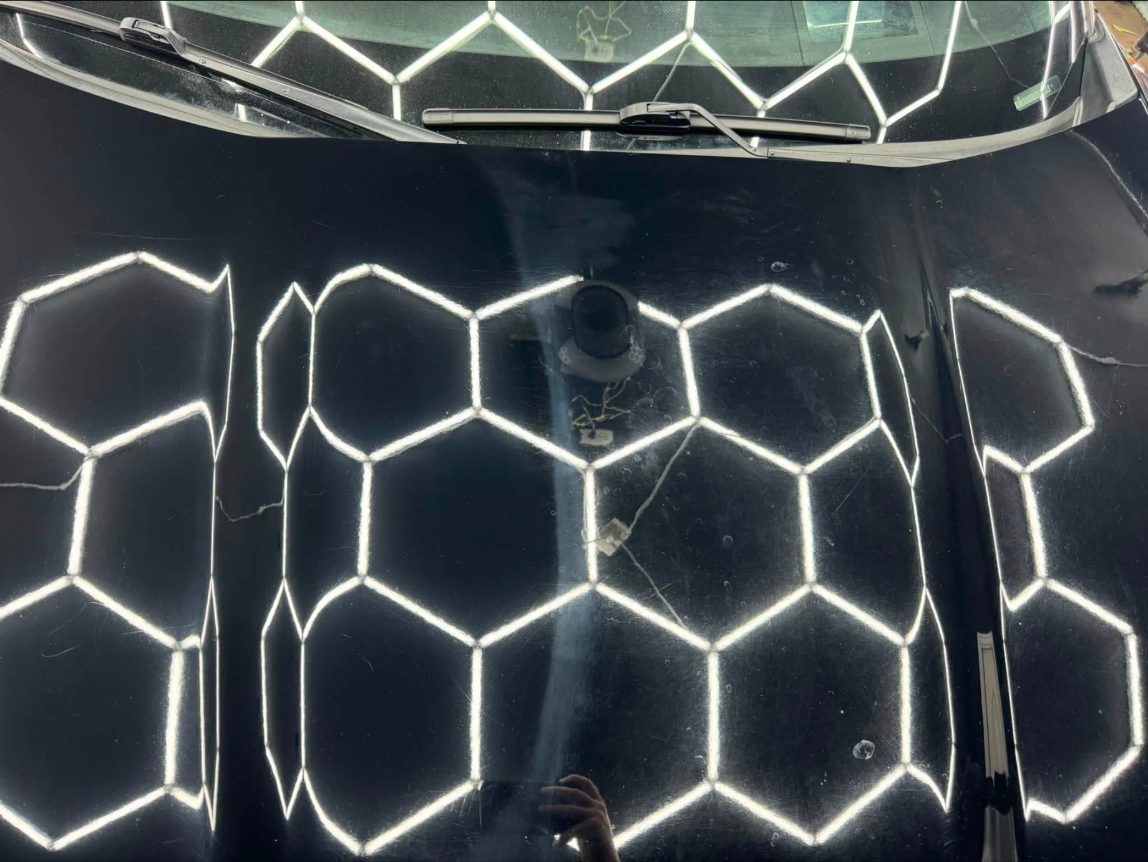
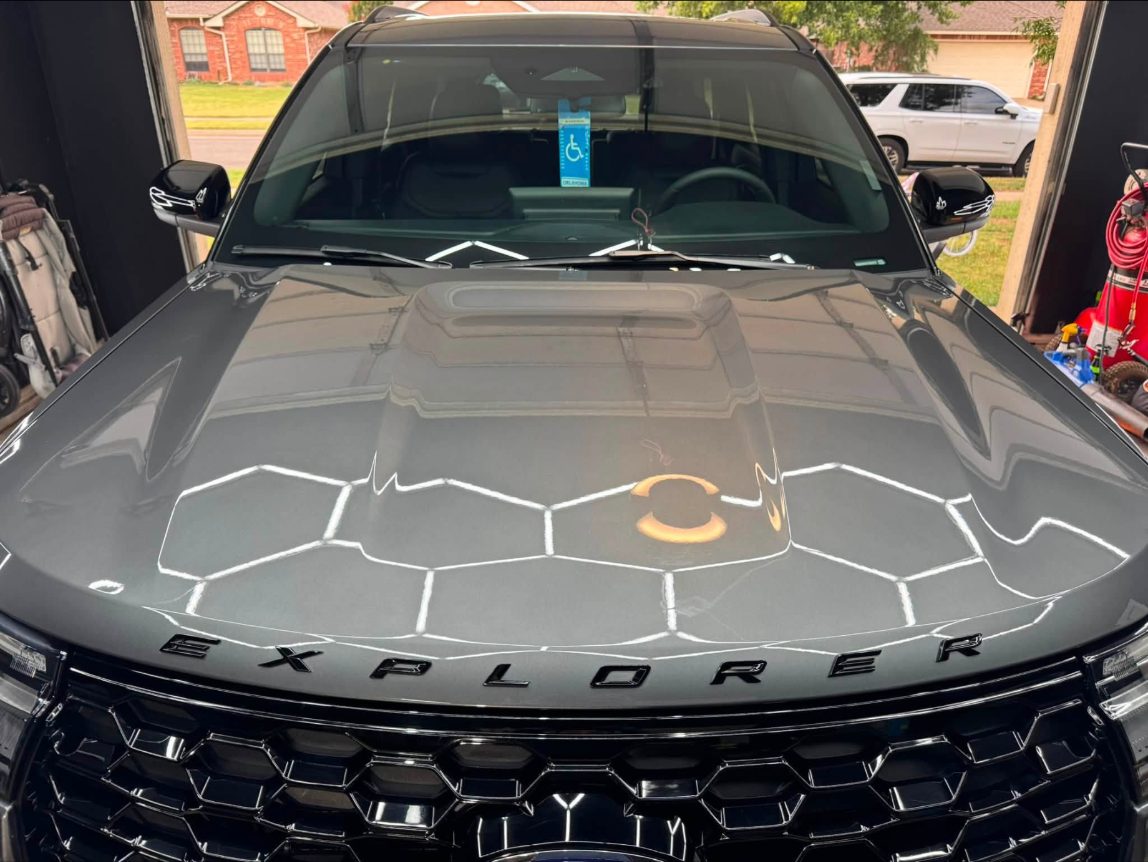
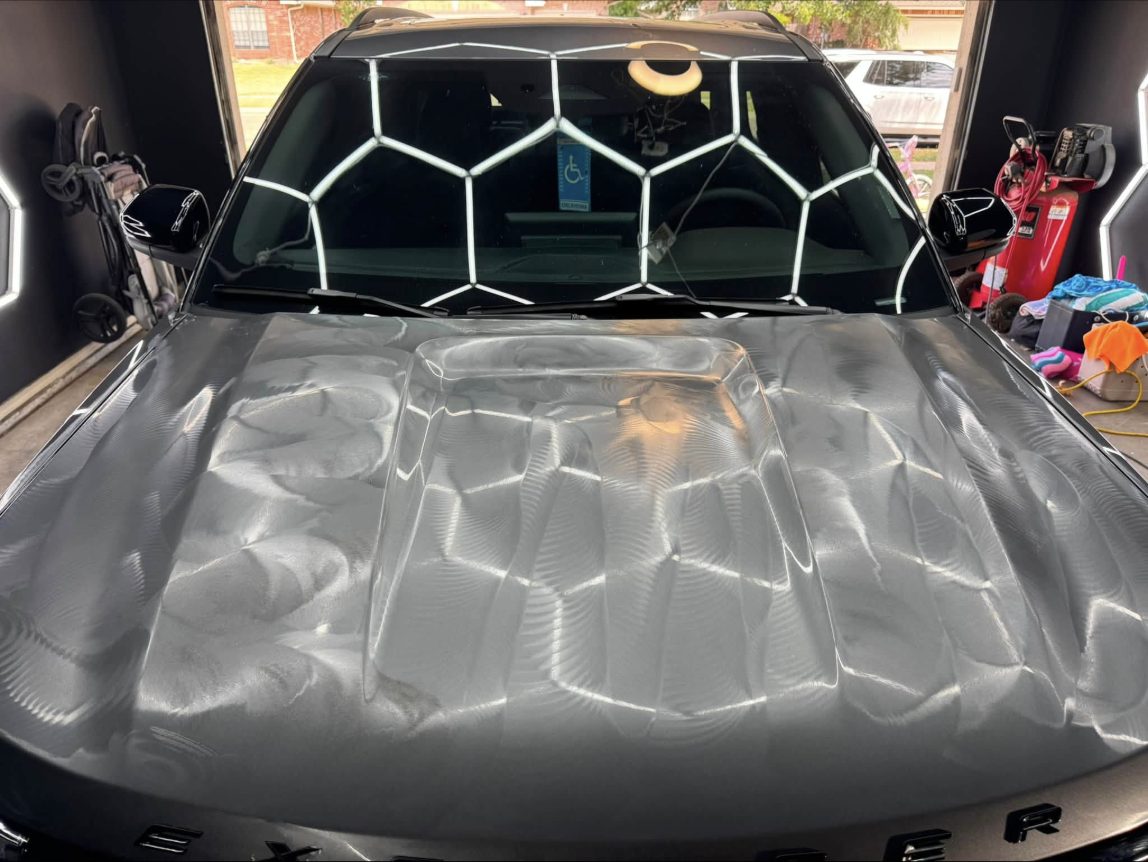 BeforeAfter
Before / after — drag it
Why the bay has hex lights.
Swirls hide in normal light and show up in the sun. The hexagon LED array in the shop reproduces that harsh light on purpose, so defects are found and measured before the polisher touches the panel — and so you can see the result before you pay for it.
Stages
How far to take it.
Paint is inspected and measured first. The stage depends on the depth of the defects and how much clear coat is there to work with — not on what package sounds best.
Gloss enhancement
One-step polish. Light swirls, dull paint, lease returns, newer vehicles that were washed badly.
- Wash, iron and tar decon, clay
- Single-stage machine polish, all panels
- Removes the majority of light swirling and restores depth
- Finished with sealant or ceramic (your call)
Typically 60–80% of light defects. Half to full day.
Two-step correction
Compound then polish. Moderate swirls, buffer trails, light scratches, oxidation, water-spot etching.
- Full decon and paint-depth check
- Heavy-cut compounding stage
- Refining polish stage for gloss
- Panel wipe and inspection under hex lighting
- Ceramic coating strongly recommended to protect the work
Typically 85–95% of defects. One to two days.
Multi-stage correction
Show cars, black paint, neglected finishes. Everything the paint can safely give.
- Wet sanding of deeper isolated defects where clear coat allows
- Multiple compounding and polishing passes
- Trim, emblems and edges taped and hand-finished
- Full inspection and documented results
Quoted after in-person inspection. Two-plus days.
Classics and single-stage paint. Original paint gets treated differently — gentler abrasives, more measuring, more hand work. It's a specialty here, not an afterthought.
Plain English
What correction is (and isn't)
Your clear coat is thin — usually less than the thickness of a sheet of paper. Swirls and scratches are grooves in it. A polish and a machine remove a few microns of clear coat to level those grooves so light reflects cleanly again. That's correction.
A "wax and buff" fills the grooves with oils. It looks great in the parking lot and is gone after a few washes. A17 doesn't do that, and won't call it correction.
Because clear coat doesn't grow back, every job starts with a paint-depth reading and ends with protection — a sealant at minimum, a Gtechniq ceramic coating if you want the result to last.
From the reviews
I took Jeremy's open spot on Saturday. Had him detail my classic 1978 C10 that has original paint. It looks phenomenal. He put it back to life.
Larry Hales · Facebook recommendation · July 2026
All reviewsGet a quote
Bring it into the light.
Send a photo in direct sun and you'll get an honest read on what stage the paint needs — and what it'll cost.